The European Union has stopped exporting plastic waste to non-OECD countries. A significant environmental decision — but one that raises an uncomfortable question about Europe’s struggling recycling industry.
Europe Decides to Keep Its Plastic Waste
On 21 November 2026, the European Union implemented a ban on exporting plastic waste to countries outside the Organisation for Economic Co-operation and Development (OECD).
Under Regulation (EU) 2024/1157, the prohibition applies to all plastic waste, including clean, non-hazardous materials destined for recycling.
The restrictions will remain in force until at least May 2029, after which eligible non-OECD countries may apply to receive certain plastic-waste shipments under strict environmental conditions.
The European Commission presents the decision as an important step towards ensuring that Europe takes responsibility for the waste it generates rather than transferring environmental problems to countries with potentially inadequate waste-management infrastructure.
A reasonable objective. But there is an uncomfortable question.
What happens when Europe stops exporting plastic waste while its own recycling industry is struggling to survive?
The Numbers Behind Europe’s Plastic Waste Trade
According to the European Commission, the EU generates approximately 40 million tonnes of plastic waste annually. Between 1 million and 1.5 million tonnes are exported each year. In 2025, approximately half of these exports were shipped to non-OECD countries.
The principal destinations for EU plastic-waste exports included Türkiye (510,000 tonnes), Malaysia (276,000 tonnes), Indonesia (215,000 tonnes), Vietnam (137,000 tonnes) and the United Kingdom (108,000 tonnes).
There is an important distinction here. Türkiye and the United Kingdom belong to the OECD. Malaysia, Indonesia and Vietnam do not. Consequently, the prohibition does not apply equally to all these destinations.
Exports to OECD countries remain possible, subject to tighter controls and environmental scrutiny. Which brings us to the next question.
Will Plastic Waste Simply Be Redirected to Türkiye?
Türkiye was already the largest individual destination for European plastic-waste exports in 2025. Under the new regulation, shipments to Türkiye remain legally possible, although they are subject to additional oversight.
The European Commission has acknowledged concerns about the environmental management of plastic-waste shipments to certain importing countries and has committed to monitoring their capacity to manage these materials properly.
However, the distinction between OECD and non-OECD membership does not automatically guarantee that every recycling facility operates to the same environmental standards. Nor does membership alone establish whether imported plastic waste is actually recycled.
Could some of the waste previously exported to Southeast Asia now be redirected towards Türkiye or other OECD countries? Possibly. But that outcome is not established simply because the law permits such shipments.
The real test will be whether export volumes shift between destinations, whether receiving facilities comply with environmental requirements and whether the waste is genuinely recycled.
A plastic-waste export ban is only as effective as the systems responsible for enforcing it.
Meanwhile, Europe’s Recycling Industry Is in Trouble
The timing of the new restrictions is particularly interesting. Europe’s plastics recycling industry is confronting serious economic difficulties.
According to Plastics Recyclers Europe, European plastics recycling turnover fell by 5.5% in 2024, while installed recycling capacity reached approximately 13.5 million tonnes. The organisation reported that recycling facilities representing approximately 300,000 tonnes of capacity closed during 2024.
High energy costs, competition from cheaper virgin plastics, inexpensive imports and weak demand for recycled polymers have placed considerable pressure on European recyclers.
The European Commission itself acknowledged these difficulties in its December 2025 communication on accelerating the transition towards a circular economy.
In other words, Europe is tightening restrictions on sending plastic waste abroad while simultaneously confronting problems maintaining the economic viability of recycling operations at home.
This does not necessarily mean Europe lacks the physical capacity to process the additional waste affected by the ban. But it does mean that capacity, profitability, collection quality and demand for recycled products must be examined separately.
A recycling facility may exist without operating at full capacity. And a technically recyclable material may have little commercial value if nobody wants to buy the recycled polymer.
Recycling Is an Industrial Business, Not a Political Slogan
There is a tendency in European environmental policy to discuss recycling as though it were primarily an administrative exercise: set collection targets, introduce recycled-content obligations, prohibit certain waste exports, encourage circularity — and hope the economics eventually work themselves out.
But recycling is an industrial activity. It requires capital investment, energy, logistics, sorting infrastructure, technically suitable waste streams and customers willing to purchase recycled materials.
Virgin plastics compete directly with recycled polymers, and their prices are influenced by oil markets, global petrochemical capacity and industrial demand. When virgin plastic is substantially cheaper, recyclers can struggle to sell their products at commercially sustainable prices.
The European Commission recognises the problem. Its proposed response includes measures to improve the market for recycled plastics, strengthen demand and support investment.
However, regulatory ambitions do not automatically create profitable recycling businesses. If Europe wants to retain more plastic waste, it also needs economically viable ways to process it.
What About Bioplastics?
The discussion also matters for bio-based, biodegradable and compostable plastics. These materials are sometimes presented as solutions to conventional plastics pollution, but they can create different challenges for collection, sorting, recycling and end-of-life treatment.
A bio-based plastic may be chemically identical to its fossil-derived counterpart and compatible with established recycling systems. Other materials may require separate treatment.
Industrial compostability does not necessarily mean suitability for home composting, soil degradation or conventional plastics recycling. Nor should biodegradability be used to justify littering or unnecessary disposable products.
The relevant environmental performance depends on the material, the application, the available treatment infrastructure and the complete lifecycle. There is therefore little justification for automatically presenting bioplastics as a solution to Europe’s waste-management problems.
They deserve the same independent scrutiny as conventional polymers.
Environmental Responsibility or Another Unfinished Transition?
The EU’s export restrictions address a legitimate concern. Countries generating plastic waste should not rely on the availability of inexpensive overseas disposal or questionable recycling operations.
But the regulation will ultimately be judged by its practical consequences. Will more plastic waste be recycled within Europe? Will investment in domestic recycling increase? Will exporters redirect shipments towards OECD destinations? Will recycling become more profitable? Or will some difficult-to-recycle waste be diverted towards other treatment methods, including incineration?
These are questions requiring data rather than assumptions. The ban establishes a new legal boundary. It does not, by itself, guarantee the development of the industrial infrastructure needed to achieve Europe’s circular-economy ambitions.
Editorial Note — Bioplastics News
Europe has spent years telling the world how to recycle plastics. Now it has decided to stop exporting plastic waste to many of the countries that previously received it.
There is something refreshingly logical about requiring Europe to take greater responsibility for its own waste. But there is also a rather inconvenient industrial reality.
Recycling businesses need customers, affordable energy and commercially viable operations. Political declarations cannot manufacture demand for recycled polymers. And environmental ambitions do not automatically pay electricity bills.
Europe has decided where its plastic waste should no longer go. The next question is considerably more interesting. Does Europe actually know what it intends to do with it?
Disclaimer
This article is an editorial analysis of the European Union’s plastic-waste export restrictions and their potential industrial and environmental consequences. The questions raised about trade diversion, recycling capacity and waste treatment concern possible outcomes rather than established consequences of the ban. Figures and regulatory provisions are attributed to the European Commission and relevant industry sources.
Sources
1. European Commission — EU bans plastic waste exports to non-OECD countries (20 November 2026): https://environment.ec.europa.eu/news/eu-bans-plastic-waste-exports-non-oecd-countries-2026-11-20_en
2. European Commission — Plastic waste shipment rules: https://environment.ec.europa.eu/topics/waste-and-recycling/waste-shipments/plastic-waste-shipments_en
3. Regulation (EU) 2024/1157 — Waste Shipments Regulation: https://eur-lex.europa.eu/eli/reg/2024/1157/oj
4. Plastics Recyclers Europe — 2024 recycling-industry data: https://www.plasticsrecyclers.eu/news/2024-data-reveals-a-deepening-crisis-of-the-european-plastics-recycling-industry/
5. European Commission — Communication on accelerating Europe’s transition to a circular economy: https://eur-lex.europa.eu/legal-content/EN/TXT/?uri=CELEX:52025DC0805
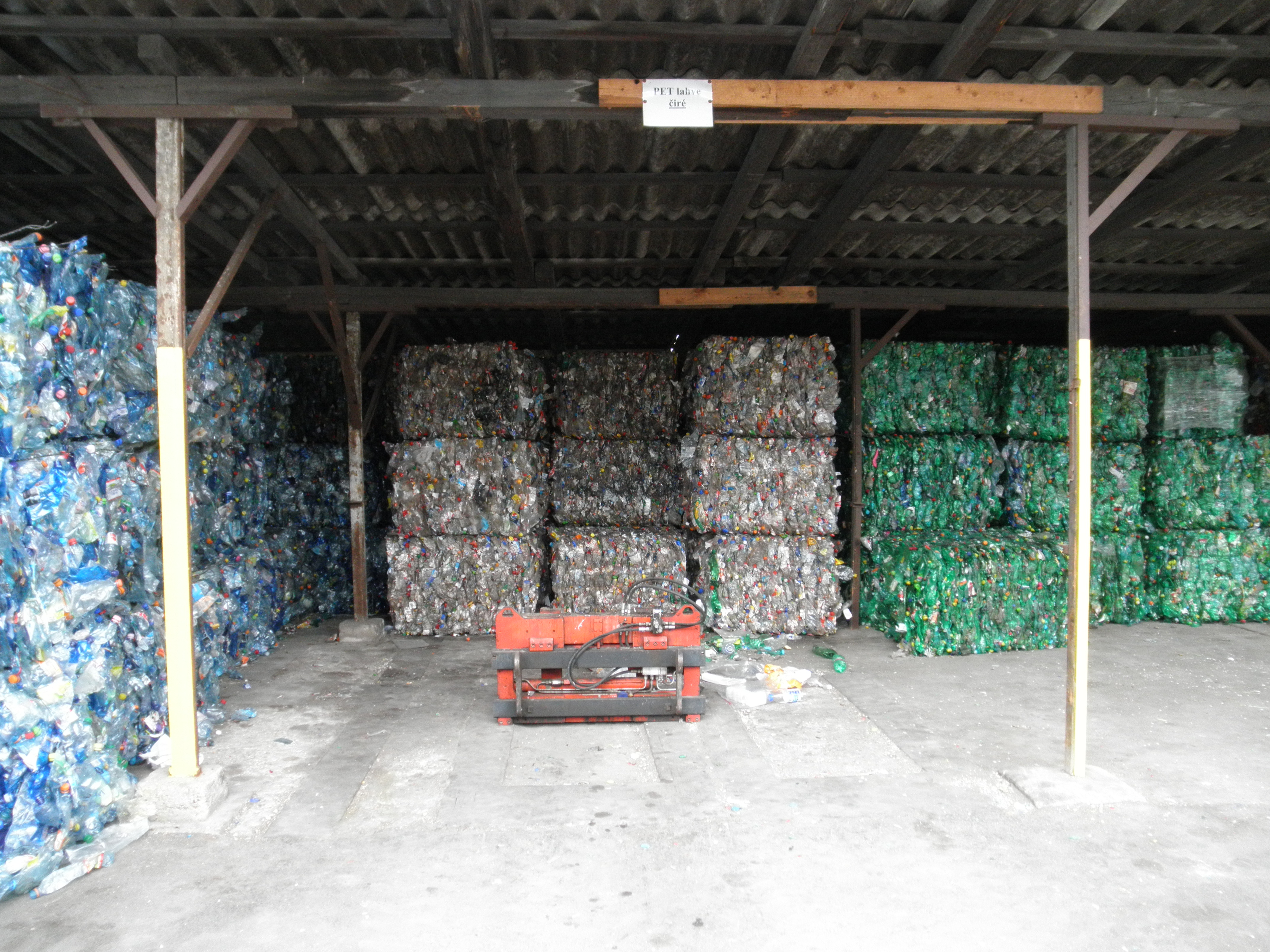
Featured photograph: PET recycling bales, Olomouc, Czech Republic. © Michal Maňas, licensed CC BY 3.0. Image used unchanged. Wikimedia Commons source.