A scientific review published in Nature Reviews Earth & Environment raises serious questions about the environmental fate of biodegradable agricultural plastics, finding that faster fragmentation does not necessarily translate into complete biodegradation in soil.
The Promise of Biodegradable Agricultural Plastics
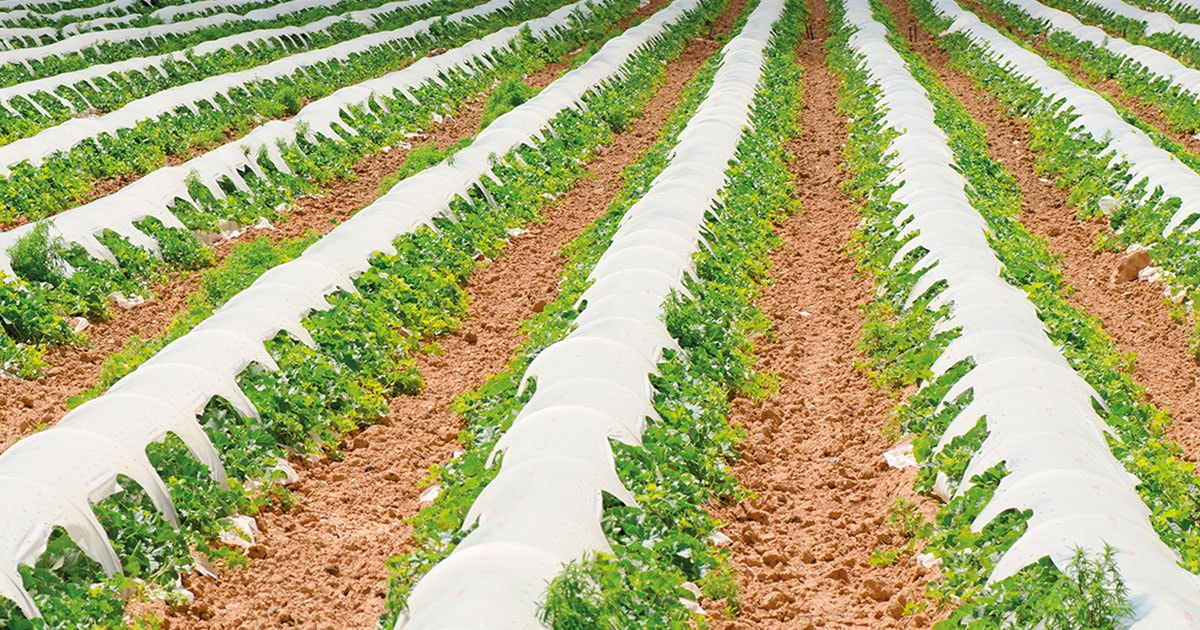
Biodegradable agricultural films have been promoted as an environmentally preferable alternative to conventional polyethylene mulch films. The promise is straightforward: instead of collecting and disposing of plastic films after harvesting, farmers can incorporate biodegradable materials into agricultural soils, where microorganisms are expected to break them down.
However, a scientific review published on 23 July 2026 in Nature Reviews Earth & Environment raises important questions about what actually happens to these materials after their incorporation into soil.
The review, titled The use, fate and environmental impacts of plastic films in agriculture, was conducted by an international research team involving scientists from China, Sweden and the United Kingdom.
Its findings highlight a fundamental distinction often overlooked in discussions about biodegradable plastics: fragmentation is not the same as complete biodegradation.
Faster Fragmentation, Limited Mineralization
One of the review’s most striking findings concerns the behaviour of biodegradable agricultural films compared with conventional polyethylene.
While conventional polyethylene breaks down slowly and primarily undergoes physical fragmentation, biodegradable films can fragment considerably faster.
In some documented cases, approximately 30% of biodegradable film material was converted into microplastics within two years.
However, the researchers also report that complete mineralization remains limited, even for biodegradable materials.
Mineralization refers to the microbial conversion of polymer carbon into carbon dioxide and biomass. It is fundamentally different from disintegration, which simply breaks a plastic object into smaller pieces.
This distinction is crucial.
A plastic film may disappear from the surface of a field while its fragments remain within the soil. Although those fragments may subsequently biodegrade, their disappearance from view does not demonstrate that the process has been completed.
The review does not suggest that all biodegradable agricultural films behave identically, nor that their microplastic fragments necessarily persist indefinitely. Different polymers, formulations and environmental conditions influence their degradation.
Nevertheless, the findings challenge the assumption that faster physical breakdown automatically delivers a superior environmental outcome.
The relevant question is not simply how quickly a plastic film disappears, but how completely and how rapidly its constituent polymers are ultimately biodegraded.
A Growing Agricultural Plastic Problem
The review also highlights the extraordinary scale of agricultural plastic use.
According to the researchers, global consumption of plastic agricultural films could reach between 9 million and 14 million tonnes annually by 2030.
These materials are widely used to regulate soil temperature, retain moisture, suppress weeds and improve crop productivity.
The agricultural benefits are substantial.
The review reports that agricultural films can increase crop yields by 7–48% and improve soil water retention by 9–25%, depending on the conditions examined.
However, these productivity improvements come with an increasingly significant environmental burden.
The researchers estimate that agricultural plastic films generate between 3 million and 5 million tonnes of largely unmanaged waste annually.
In certain agricultural soils, microplastic concentrations can reach approximately 13,000 particles per kilogram, with plastic agricultural films accounting for an estimated 10–30% of the particles in the cases examined.
These figures illustrate the growing challenge of managing agricultural plastics throughout their entire life cycle.
Replacing conventional polyethylene with biodegradable materials may address some waste-management difficulties, but it does not automatically eliminate the risk of soil contamination.
What Happens to the Microplastics?
The environmental fate of plastic fragments depends on numerous factors, including temperature, moisture, polymer chemistry, sunlight exposure and microbial activity.
Agricultural soils are particularly complex environments.
Conditions vary substantially between regions, seasons and cropping systems. Materials that biodegrade under controlled laboratory conditions may behave differently in the field.
The review identifies microplastics, nanoplastics and chemical additives as important concerns.
Plastic particles can interact with soil organisms, influence soil structure and affect nutrient cycling. Depending on their concentration, characteristics and surrounding conditions, they can also influence crop growth and soil biological activity.
Importantly, biodegradable plastic fragments should not automatically be assumed to be harmless merely because the original polymer has been classified as biodegradable.
Their ecological effects must be evaluated independently.
The researchers also draw attention to additives and poorly characterized non-intentionally added substances associated with agricultural films.
These substances can be released as materials weather, fragment or degrade, creating additional questions about their environmental behaviour and possible toxicity.
A biodegradable polymer and an environmentally harmless commercial product are not necessarily the same thing.
Laboratory Certification Versus Agricultural Reality
Europe has established specific requirements for biodegradable agricultural mulch films through the EN 17033 standard.
The standard includes biodegradation, composition and ecotoxicity requirements.
Its laboratory biodegradation criterion requires at least 90% conversion of polymer carbon into carbon dioxide within a maximum of two years, either in absolute terms or relative to a biodegradable reference material, under defined test conditions.
This provides an important framework for evaluating products.
However, laboratory certification does not guarantee that identical biodegradation rates will occur in every agricultural field.
Real soils experience fluctuating temperatures, changing moisture levels, different microbial communities and variable management practices.
These differences can influence the duration and completeness of biodegradation.
Consequently, compliance with a laboratory standard and demonstrated environmental performance under actual agricultural conditions are related but distinct questions.
The challenge is not to dismiss biodegradability standards. Rather, it is to ensure that environmental claims are supported by evidence extending beyond controlled testing.
Long-term field monitoring is particularly important when materials are deliberately incorporated into productive agricultural soils.
Is Biodegradable Always Better?
The review does not conclude that biodegradable agricultural films are universally worse than conventional polyethylene.
Such an interpretation would be scientifically unjustified.
Conventional polyethylene films are themselves a major source of persistent plastic pollution, particularly when damaged material remains in agricultural fields after harvesting.
Biodegradable alternatives may provide environmental advantages under suitable conditions, especially where conventional film recovery is difficult.
However, those advantages must be demonstrated rather than presumed.
A material that fragments rapidly but biodegrades incompletely over the relevant period could create a different pattern of plastic contamination rather than eliminate it.
Similarly, a biodegradable film that successfully mineralizes under representative field conditions may offer clear benefits compared with persistent polyethylene residues.
The distinction depends on actual performance.
Environmental assessments must therefore consider the polymer formulation, degradation products, exposure conditions, additives and long-term effects on soil ecosystems.
The label biodegradable is not, by itself, sufficient evidence of environmental sustainability.
The Need for Greater Scientific Accountability
The researchers propose several strategies to improve agricultural plastic management.
These include developing safer additives, improving biodegradable polymers, expanding conventional film recycling and strengthening environmental monitoring.
They also recommend creating a global database documenting agricultural film use and composition.
Such initiatives could improve transparency and help policymakers distinguish between materials that perform reliably under real agricultural conditions and those whose environmental benefits remain uncertain.
For the biodegradable plastics industry, the findings should encourage more rigorous evidence of environmental performance.
Manufacturers should demonstrate not only that their materials fragment or lose visible mass, but also what happens to the resulting particles and whether biodegradation reaches an environmentally meaningful endpoint.
Independent field studies, transparent degradation data and long-term assessments would help establish whether biodegradable agricultural films genuinely reduce plastic pollution.
The scientific question is no longer simply whether biodegradable plastics can be developed.
It is whether their environmental performance can be demonstrated consistently under the conditions in which they are actually used.
Conclusion: Disappearance Is Not Biodegradation
The review published in Nature Reviews Earth & Environment reinforces an essential principle of environmental science: the disappearance of a plastic product does not necessarily mean the disappearance of the plastic itself.
Biodegradable agricultural films can fragment faster than conventional polyethylene, yet complete mineralization may remain limited under certain conditions.
This does not invalidate all biodegradable agricultural technologies.
It does, however, challenge claims that biodegradability alone guarantees a sustainable solution to agricultural plastic pollution.
If agricultural plastics are intended to be incorporated directly into soil, their ultimate environmental fate must be understood and demonstrated.
After all, making plastic fragments less visible is not the same as making plastic pollution disappear.
Editorial Note — Bioplastics News
The findings discussed in this article are based on a scientific review of published research, not a universal assessment of every commercial biodegradable mulch film. Bioplastics News considers that agricultural biodegradability claims should be supported by independent evidence of complete degradation under representative field conditions. The environmental protection of agricultural soils should take precedence over marketing terminology.
Scientific Sources
Primary review — Nature Reviews Earth & Environment (23 July 2026) — https://www.nature.com/articles/s43017-026-00808-9
Field study — Dynamics of macroplastics and microplastics formed by biodegradable mulch film in an agricultural field (2023) — https://pubmed.ncbi.nlm.nih.gov/37301399/
European standard — EN 17033:2018 — https://app.nbn.be/data/r/platform/frontend/detail?p40_id=215315&p_lang=en
Field degradation study — Mediterranean agricultural conditions — https://pubmed.ncbi.nlm.nih.gov/34560460/