Panama accused the petroleum industry of holding the world hostage. Meanwhile, fossil-fuel representatives attended the climate summit, governments argued over whether to mention oil, gas and coal, and COP31 ended without an overarching political agreement. Welcome to the theatre of global climate diplomacy.
Panama Says What Others Prefer to Whisper
At the COP31 climate summit in Antalya, Türkiye, Panama’s environment minister Juan Carlos Navarro abandoned the diplomatic vocabulary normally associated with international climate negotiations.
He accused the world of being held hostage by what he called the “petroleum mafia.”
It was an extraordinary accusation from a government minister attending a United Nations climate conference. Navarro went further, comparing governments’ continued dependence on fossil fuels to Stockholm syndrome — a situation in which captives develop an emotional attachment to their captors.
His remarks, reported by Euronews on 20 November 2026, raised an uncomfortable question: Who is actually running international climate policy: elected governments or the industries whose products they are supposed to regulate?
A Climate Conference That Couldn’t Agree on Fossil Fuels
The timing of Navarro’s intervention was particularly revealing. COP31 was supposed to advance global climate cooperation. Instead, negotiators fought over whether the summit’s main political declaration should explicitly mention fossil fuels.
The draft presented during the final stages of negotiations contained no explicit reference to coal, oil and natural gas — the energy sources whose combustion is responsible for most human-induced climate change.
On 22 November 2026, the summit ended without an overarching political agreement after the European Union, Panama and several other countries rejected the proposed text.
Think about that for a moment. Representatives from nearly 200 countries assembled to discuss climate change, but they could not agree on a declaration explicitly addressing its principal cause.
At some point, the distinction between international diplomacy and political theatre becomes rather difficult to identify.
The Oil Lobbyists Were There Too
While Panama was denouncing petroleum-industry influence, representatives of that industry were attending the same summit.
According to an investigation published on 12 November 2026 by the Fossil Free Politics coalition, Italy included 50 fossil-fuel industry representatives in its COP31 delegation. The coalition said the Italian group included ENI, and identified one ENI participant as the company’s chief international lobbyist.
The coalition also identified fossil-fuel representatives included in the French and Belgian delegations, and reported that those representatives received party overflow badges that can give access to government-only spaces.
Why should representatives of industries directly affected by climate negotiations receive that level of access through government delegations?
Attending a conference, of course, does not automatically establish improper lobbying or interference with negotiations. No evidence presented here proves that ENI instructed negotiators, influenced the final wording of the proposed agreement or contributed to COP31’s collapse.
Nevertheless, the reported presence of an oil company’s international lobbyist inside a national delegation deserves scrutiny. The petroleum industry is not merely watching international climate policy from the sidelines.
The Petroleum Industry’s Political Influence
The oil industry occupies a remarkable position in the global economy. Its products power transportation, support manufacturing and provide raw materials for chemicals, plastics and countless consumer products.
Governments depend on petroleum revenues; businesses depend on hydrocarbon supply chains; consumers depend on products derived from fossil fuels. This dependence creates economic and political leverage.
At COP31, major oil-producing countries, including Saudi Arabia, resisted stronger language on transitioning away from fossil fuels. They argue that moving too quickly could threaten energy security, development and affordability. Those concerns deserve serious consideration.
But there is a distinction between managing an orderly energy transition and preventing international agreements from acknowledging the need for one. That distinction sat at the heart of the COP31 dispute.
The Greenwashing Circus: Oil, Plastics and Bioplastics
For the plastics and chemicals industries, the controversy raises another uncomfortable question. Petroleum is not simply a fuel. It is also a fundamental industrial feedstock.
A 2025 study published in Communications Earth & Environment estimated that approximately 98% of virgin plastics produced globally in 2022 originated from fossil-based feedstocks, including coal, petroleum and natural gas.
This is where bioplastics, renewable feedstocks and alternative materials enter the conversation. But bioplastics are not automatically environmentally sustainable, and their promotion can become another form of greenwashing.
A bio-based plastic is not necessarily biodegradable. A biodegradable plastic is not necessarily bio-based. And a product marketed as compostable may require specific industrial conditions unavailable in many waste-management systems.
Producing plastics from agricultural feedstocks can create pressures involving land use, fertilisers, water consumption and competing demands for biomass. Even genuine biodegradability does not automatically justify disposable products or environmental littering.
Environmental marketing can turn technically complex materials into remarkably simple promises. Consumers may be led to believe that replacing a petroleum-derived polymer with a bio-based alternative necessarily represents environmental progress.
Sometimes it may. Sometimes the benefits are limited, depend on local infrastructure or are outweighed by other environmental impacts.
The relevant question is not whether a material comes from petroleum or plants. It is whether it delivers a demonstrable environmental improvement across its entire lifecycle.
That requires independent evidence, transparent methodologies and realistic end-of-life scenarios. The scrutiny applied to petroleum companies should also extend to bioplastics manufacturers, certification schemes and businesses selling supposedly sustainable alternatives.
The Problem With Climate Diplomacy
International climate negotiations operate by consensus. In principle, this protects countries from commitments they cannot accept. In practice, it also means that a relatively small number of governments can block stronger collective language.
COP31 illustrated the limitations of this arrangement. Some countries demanded explicit language to accelerate the transition away from fossil fuels. Others opposed it or argued that action must reflect their national circumstances and development priorities.
Disagreements over adaptation finance further complicated negotiations. Panama rejected the proposed political agreement, and the summit ended without the central deal its organisers had hoped to deliver.
This does not prove the existence of a criminal organisation controlling climate negotiations. Navarro’s “petroleum mafia” characterisation was political rhetoric, not a judicial finding.
But it raises legitimate questions about industrial access, the consensus system and the ability of governments to reconcile climate objectives with economic dependency.
Who Benefits From the Climate Circus?
Governments promise ambitious environmental transformations while remaining dependent on the industries that support their economies. Oil companies discuss decarbonisation while continuing to produce hydrocarbons. Chemical companies promote circularity while confronting technological and economic constraints.
Bioplastics manufacturers promote sustainable alternatives, sometimes without adequately explaining the conditions under which their products deliver measurable environmental benefits.
None of these tensions automatically establishes dishonesty or wrongdoing. Industrial transitions are complicated, expensive and technically challenging. But complexity should not excuse misleading environmental claims, opaque lobbying or political declarations that avoid central problems.
If climate negotiations are to retain credibility, governments need to demonstrate that their decisions are based on science, transparent analysis and the public interest. That means scrutinising fossil-fuel interests — and also scrutinising the companies claiming to offer the solutions.
Greenwashing does not become environmentally acceptable simply because the product is marketed as green.
Editorial Note — Bioplastics News
Perhaps the most interesting aspect of COP31 was not that Panama’s environment minister used the expression “petroleum mafia.” It was that a United Nations climate conference could collapse over whether its political declaration should explicitly address fossil fuels.
Meanwhile, representatives of the fossil-fuel industry, including ENI’s chief international lobbyist according to Fossil Free Politics, were reportedly accredited through government delegations.
We have developed a remarkable international system: governments organise climate conferences, corporations promote sustainability credentials, industry representatives attend, and negotiators spend days arguing over declarations.
Somewhere in the background, consumers are encouraged to save the planet by buying products with ever more inventive environmental labels.
Perhaps the problem is broader than the oil industry: a system in which political promises, industrial interests and environmental marketing are so intertwined that genuine progress becomes difficult to separate from public relations.
The oil industry sells petroleum. The green industry sells sustainability. Politicians sell climate ambitions. And the planet? Apparently, it will have to wait for COP32.
Disclaimer
This article is editorial commentary based on publicly reported events, scientific research and attributed statements. The expression “petroleum mafia” is attributed to Panama’s environment minister Juan Carlos Navarro and is not presented as an allegation of criminal conduct against any particular company or individual. References to industry representation and lobbying classifications do not prove improper influence, misconduct or responsibility for the negotiations’ outcome. The discussion of greenwashing does not imply that every bioplastics manufacturer makes misleading claims.
Sources
Euronews (20 November 2026): Panama’s “petroleum mafia” remarks.
Fossil Free Politics (12 November 2026): Investigation into fossil-fuel representatives accredited through European delegations.
Reuters (22 November 2026): Analysis of the collapse of COP31 negotiations.
Communications Earth & Environment (2025): Global plastics supply-chain study.
European Commission: Policy framework for bio-based, biodegradable and compostable plastics.
European Environment Agency: Biodegradable and compostable plastics: challenges and opportunities.
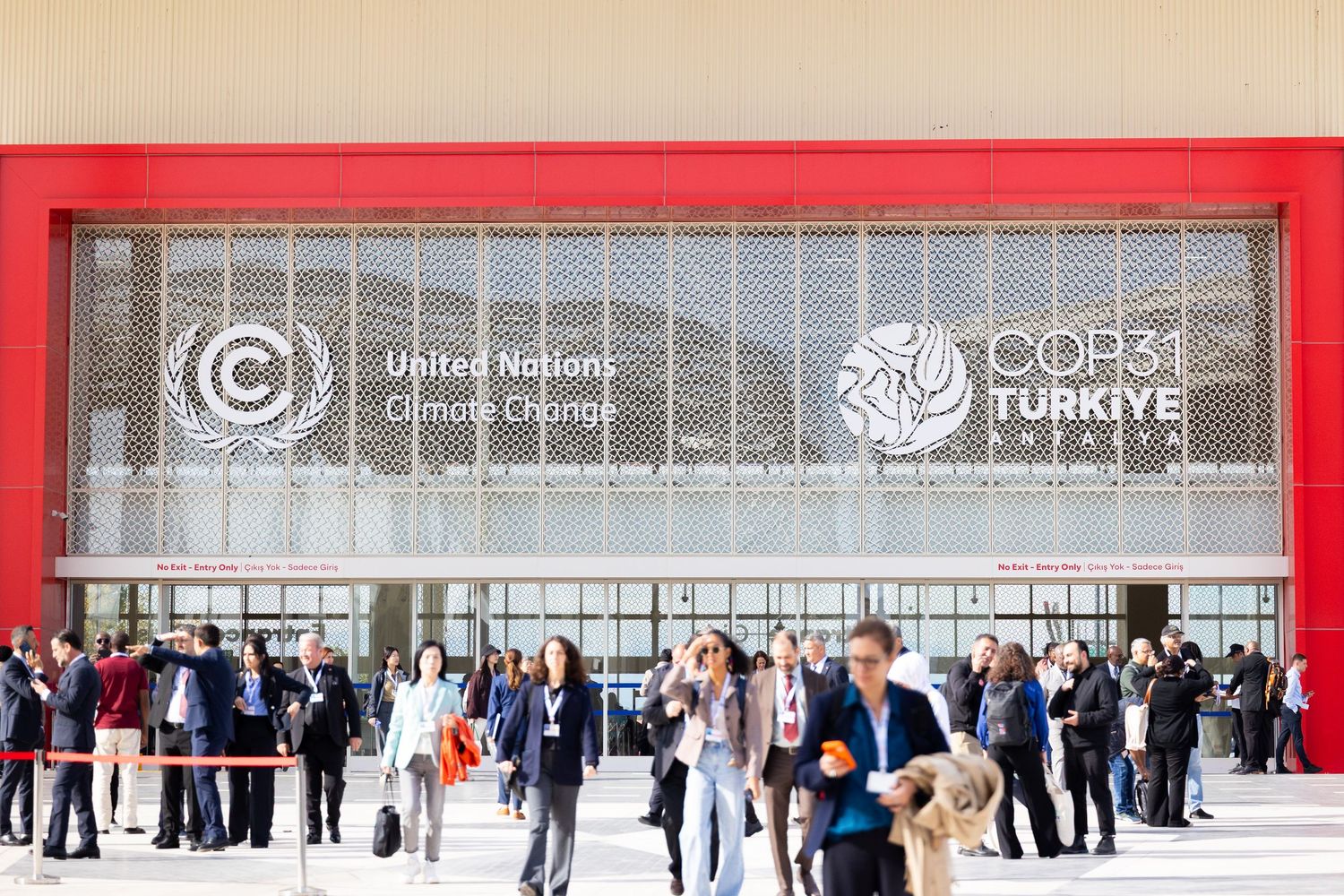
Featured photo: UN Climate Change / UNFCCC, COP31 official photo gallery, photos.unfccc.int.