Author: Editor
-

The impact of anti-renewables rhetoric on Asia’s energy transition
They blame the ‘anti-renewables’ rhetoric on Trump. That’s Fake news. I believe there’s a trust crisis. We don’t know who to believe anymore. The regular people (middle class) don’t trust the people and organisations who are responsible to promote Renewables and global warming (predecessor of climate change) anymore. In addition, the term renewables was coined…
Written by
·
-
NGOs complain about fossil ads to OECD
What about human rights abuses on palm oil plantations? What about human rights abuses in China with the solar panels?
Written by
·
-

Science is becoming more and more elitist (FREE)
Let me share my opinion on this matter because I don’t think it’s a positive evolution in the scientific world. This is a FREE article.
Written by
·
-

Trump brings back plastic straws
On the other hand, the EU institutions believed that the plastic waste pollution in the oceans could be solved by banning plastic straws, oxo bioplastics and plastic cocktail stirrers.
Written by
·
-
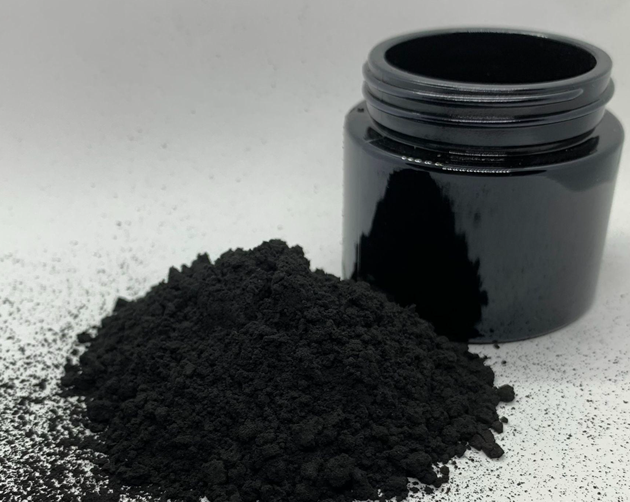
Dama Bioplastics sets sights on 2025 with carbon-negative material
Carbon negative materials?? The UN and EU must love the concept of carbon negative materials. For me it’s just absurd greenwashing
Written by
·
-

Hard-to-recycle plastics can “mail it in” (FREE)
Article by David Goldstein, Ventura County Public Works Agency Environmental Resource Analyst. This is a FREE article
Written by
·
-
Solvay startup Syensqo supplied drone parts used to bomb aid workers in Gaza (FREE)
Syensqo is a Belgian startup created by Solvay and run by ex Solvay CEO. This is a FREE article.
Written by
·
-

A Groundbreaking Pivot: TenCate Launches First Artificial Turf that Truly Replicates Grass Field (FREE)
This is a FREE article.
Written by
·
-

Advertising by Agilyx / Styrenyx (FREE)
Styrenyx is driving the reduction in CO2 emissions by 40% By leveraging Styrenyx, our advanced recycling technology, Toyo Styrene, a member of the Denka Group, can recycle 3,000 tons/year of post-use polystyrene into new food-grade products. The potential of this innovation is expected to cut Toyo operations’ CO2 emissions by approximately 40% (compared to traditional…
Written by
·
-

Beyond Recycling: How Enzymicals AG is Advancing Enzymatic PET Upcycling (FREE)
Every year, over 70 million tons of PET are produced globally, contributing to persistent plastic waste. While conventional recycling methods have limitations, the EU Horizon 2020-funded upPE-T project is exploring enzymatic PET hydrolysis as a pathway to upcycle plastic waste into biodegradable polyhydroxybutyrate-valerate (PHBV). Enzymicals AG plays a key role in optimizing PETase enzymes for…
Written by
·
-
Compostable plastic stools; designers are experimenting with biomaterials
ADVERTISING – New revolutionary biodegradable plastic resin from Symphony Environmental called ‘NbR’: Less fossil and CO2 emissions
Written by
·
-

University of Waterloo ‘food waste’ Bioplastic Startup (update)
ADVERTISING – New revolutionary biodegradable plastic resin from Symphony Environmental called ‘NbR’: Less fossil and CO2 emissions
Written by
·
-

NL Government to invest € 35 M in fake plastic recycling projects
Apparently, the NL government has too much money and wants to burn some cash — ADVERTISING – New revolutionary biodegradable plastic resin from Symphony Environmental called ‘NbR’: Less fossil and CO2 emissions
Written by
·
-

Aquapak Polymers calls for more collaboration
More collaboration? The EU bioplastics industry is not an inclusive club; it’s a selective club made out of lobbyists who bribed their way to the top of the EU institutions.
Written by
·
-

‘Multi-year’ droughts have become more frequent, drier and hotter over past 40 years
One of the achilles heel of biobased plastics is that it relies on intensive agriculture which makes the feedstock supply chain unpredictable — ADVERTISING – New revolutionary biodegradable plastic resin from Symphony Environmental called ‘NbR’: Less fossil and CO2 emissions
Written by
·
-
EU Official Journal publishes Packaging and Packaging Waste Regulation
ADVERTISING – New revolutionary biodegradable plastic resin from Symphony Environmental called ‘NbR’: Less fossil and CO2 emissions
Written by
·
-

Paperisation is not the silver bullet for food packaging
ADVERTISING – New revolutionary biodegradable plastic resin from Symphony Environmental called ‘NbR’: Less fossil and CO2 emissions
Written by
·