
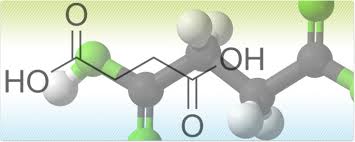
The U.S. Department of Energy (USDOE) considers succinic acid as one among the top twelve chemical building blocks.
Succinic acid, as a platform chemical, is growing in demand in various applications.
However, consumption of petroleum based succinic acid, as an intermediate, in manufacturing various chemicals, is limited due to its volatility of price and carbon footprints.
These concerns led to the discovery of biological manufacturing of succinic acid.
The bio succinic acid market is forecast to grow at a significant rate over the next seven years.
The major drivers for this growth will be volatility in fossil fuel prices, rise in carbon footprints, and an interest in using locally available raw materials.
Furthermore, increasing global demand of green chemicals will trigger its adoption in wide range of applications, especially, in bio plastics, making it a strong platform chemical.
Bio succinic acid is primarily being used as a replacement for petrol based succinic acid in few applications such as solvents and lubricants, de-icer solutions, cosmetics, food and pharmaceuticals.
Furthermore, newer application such as 1,4-Butanediol (BDO), PBS, plasticizers and polyesters polyols market will accelerate the future growth of the market.
Additionally, higher cost of crude oil, increase in investments for green chemicals, demand for renewable chemicals, and increase in government support will further boost the growth of the market.
However, higher price of bio succinic acid and lengthy extraction processes are primarily restraining the market growth for the next few years.
The global bio-based succinic acid market is expected to reach market volume of 710.000 tons by 2020, growing at an average annual growth rate of 45.6% during 2013-2020.
Among the four geographic markets, namely North America, Europe, Asia Pacific and Rest of the World, Europe was the largest consumer of bio succinic acid in 2013.
Stringent regulations in Europe towards carbon footprints have enabled significant application of bio succinic acid in various chemical manufacturing units.
However, Asia Pacific will be the fastest growing market with an expected CAGR of 49.5% during 2013 to 2020.
The major companies profiled in this report include BioAmber (Canada), Myriant USA), DSM/ Roquette’s JV Reverdia (Italy), Mitsui & Co (Japan), Mitsubishi (Japan) BASF (Germany) and Corbion-Purac (Holland).
The global bio succinic acid market is segmented on the basis of following product and market applications:
- 1,4-Butanediol (BDO)
- Polyester Polyols
- Polybutylene succinate (PBS)
- Plasticizers
- Solvents & lubricants
- Alkyd resins
- Resins, coatings, pigments
- De-icer solutions
- Food applications
- Pharma applications
- Cosmetics applications
- Others
Leave a Reply