The European Commission has launched a new investigation into rising imports of glass fibres, composite resins and industrial chemicals. But with European chemical plants closing and production declining, can trade restrictions solve the industry’s problems?
Brussels Launches Another Trade Investigation
On 23 November 2026, the European Commission announced a safeguard investigation into imports of glass-fibre reinforcements, composite manufacturing resins and several chemicals used in their production.
The investigation follows a significant increase in imports and growing concerns about the competitiveness of European manufacturers. According to the Commission, imports of the materials concerned rose approximately 29% between 2019 and 2025, reaching 898,000 tonnes. Over the same period, European producers’ share of the EU market declined from 74% to 62%.
The Commission wants to establish whether this increase has caused, or threatens to cause, serious injury to European manufacturers. If the relevant legal tests are met, Brussels could consider safeguard measures such as import quotas or additional tariffs. None have been imposed under this new investigation.
But the investigation raises an uncomfortable question: Is Europe’s chemical industry losing competitiveness because of foreign imports, or are foreign imports becoming more attractive because producing chemicals in Europe has become increasingly expensive? Perhaps both.
Which Chemicals and Materials Are Under Investigation?
The investigation covers glass-fibre reinforcements, including chopped strands, rovings and mats; epoxy resins; unsaturated polyester resins; vinyl ester resins; and industrial intermediates such as epichlorohydrin, isophorone diamine and maleic anhydride.
These materials are used in wind-turbine blades, aircraft components, automotive parts, electrical infrastructure, construction and other industrial applications. This is more than a trade dispute over commodity chemicals: it also affects European manufacturers using the materials as inputs.
Europe’s Chemical Industry Is Already in Serious Trouble
In January 2026, the European Chemical Industry Council (Cefic) published research prepared by Roland Berger examining chemical plant closures and investment trends in Europe.
The findings were striking: between 2022 and 2025, announced chemical plant closures represented approximately 37 million tonnes of annual production capacity, roughly 9% of Europe’s chemical production capacity. The report associated the announcements with around 20,000 direct industrial jobs.
These are announced closures and affected capacity — not proof that every facility has already shut down. Nevertheless, they show the scale of the restructuring under way.
The report identified energy-cost competitiveness as the most frequently cited reason for closure announcements, accounting for roughly 49% of cases. Weak demand, overcapacity and regulatory factors were among the other reasons identified.
In its October 2026 Chemical Trends Report, Cefic also reported that EU chemical production declined by approximately 2% during the first seven months of 2026 compared with the equivalent period in 2025. Polymer production fell around 6.6%.
This is an industry confronting difficulties that cannot necessarily be explained by imports alone.
Can Import Tariffs Fix Europe’s Energy Costs?
European manufacturers compete with producers operating under very different conditions. Feedstock prices, energy, labour, environmental standards, investment, logistics and scale all influence costs.
Cefic has repeatedly highlighted Europe’s energy-cost disadvantage compared with competing industrial regions, including the United States.
Import restrictions could offer relief to domestic producers, but they do not automatically reduce electricity prices, make natural gas cheaper, modernise ageing plants or restore demand.
A tariff may make an imported chemical more expensive. It does not automatically make the European chemical industry more competitive.
Protecting producers against a sudden surge in imports and repairing the structural economics of manufacturing are related objectives, but they are not interchangeable.
The Chinese Competition Question
China’s expanding production capacity has become an important feature of global chemical and materials markets. The Commission has pointed to international overcapacity and trade barriers elsewhere as factors worth examining in connection with the import increase.
But this safeguard investigation is not limited to China. Unlike an anti-dumping case focused on particular products and exporters, a safeguard investigation considers whether rising imports are causing serious injury to the domestic industry.
Any eventual safeguard measure would generally apply across origins, subject to the legal framework and applicable exceptions. Other trading partners and European industrial buyers could therefore be affected.
Would restrictions protect European supply chains, or increase the input costs of European manufacturers relying on imported resins and fibres? Both possibilities deserve examination.
Brussels Has Already Introduced Other Trade Defence Measures
This is not the Commission’s first intervention in related markets. On 15 April 2026, it announced definitive anti-dumping measures concerning certain glass-fibre products originating in Bahrain, Egypt and Thailand. In September, it maintained countervailing measures concerning certain Egyptian glass-fibre imports.
On 6 November 2026, Brussels launched a separate safeguard investigation into certain PET resin chemicals. Less than three weeks later came the new investigation into composites and associated chemical inputs.
Taken together, these actions show the growing attention being paid to trade defence in materials and chemicals. They do not, by themselves, establish that every affected European manufacturer has suffered injury from imports.
If repeated investigations identify pressure on European industry, should the policy response focus mainly on imports? Or should it be accompanied by equally rigorous scrutiny of domestic energy costs, infrastructure and investment conditions? The approaches need not be mutually exclusive.
The Other Side: Europe’s Industrial Customers
A European company manufacturing a composite component for a wind turbine may buy glass fibres, epoxy resins and chemical intermediates from several countries. If tariffs raise the price of imported inputs, that company could face higher production costs.
The same concern applies to manufacturers of vehicles, electrical equipment and other products using reinforced polymers. The interests of upstream chemical producers and downstream industrial customers are not always identical.
This does not make safeguards unjustified. Where the legal conditions are met, temporary measures can offer an industry breathing space. But the wider EU interest matters, including effects on customers and supply chains.
There is little point in protecting one part of an industrial value chain without considering what happens to another.
What Does This Mean for Plastics and Bioplastics?
Glass fibres are commonly combined with polymer resins to manufacture reinforced plastic composites. Import restrictions could therefore affect sourcing and costs in parts of Europe’s plastics-manufacturing sector.
For bioplastics, the connection is more indirect. Bio-based resins and polymer composites may compete in certain applications, but they are not automatic substitutes for every material covered by the investigation.
Nor should bio-based alternatives automatically be labelled environmentally superior. Environmental outcomes depend on feedstocks, energy, manufacturing, durability, application and end-of-life treatment. Green marketing does not eliminate production costs or industrial competitiveness challenges.
Will Brussels Investigate the Causes as Thoroughly as the Imports?
The Commission must now determine whether increased imports have caused, or threaten to cause, serious injury and whether safeguards would be justified. That assessment should rest on evidence rather than political assumptions.
But the wider industrial problem remains. European chemicals producers face energy costs, changing demand, international competition and significant restructuring.
Trade restrictions may address one part of that problem. They cannot reasonably be expected to address it all. Europe needs to consider energy competitiveness, infrastructure, investment certainty, technological innovation and commercially sustainable production alongside legitimate trade defence.
Otherwise, Europe may find itself repeatedly investigating imported chemicals while its domestic manufacturing base continues to weaken.
Editorial Note — Bioplastics News
Europe’s chemical industry is losing production capacity, struggling with energy costs and facing growing international competition. The European Commission’s response now includes yet another investigation into foreign imports.
There may be legitimate grounds for trade protection. That is precisely what the investigation is supposed to establish.
But when European manufacturers identify energy prices as a major reason for shutting factories, making imported chemicals more expensive does not necessarily solve the underlying problem. It might simply change the economics of the next purchase order.
Perhaps Brussels should ask not only why foreign chemicals are entering Europe, but why producing those same chemicals in Europe has become so difficult. Protecting an industry and making it competitive are two very different things.
Disclaimer
This article is editorial analysis based on European Commission announcements, trade-defence documents, industry research and independent reporting. The investigation launched on 23 November 2026 has not established that imports caused serious injury, and no new safeguards have been imposed under it. Closure and competitiveness figures are attributed to the relevant research. Commentary on EU industrial policy does not imply wrongdoing by any particular official, government or company.
Sources
1. European Commission, 23 November 2026: Safeguard investigation into composite imports.
2. Reuters, 23 November 2026: EU launches trade probe into glass fibre and chemicals.
3. Euronews, 23 November 2026: Trade-defence investigation coverage.
4. Cefic, 28 January 2026: Chemical plant closure research.
5. Cefic, 2026: Chemical Trends Report Q3 2026.
6. European Commission, 6 November 2026: PET resin chemicals investigation.
7. European Commission, 15 April 2026: Glass-fibre anti-dumping measures.
8. European Commission: Safeguard investigation procedures.
9. European Commission transition pathways: Cefic chemical production report.
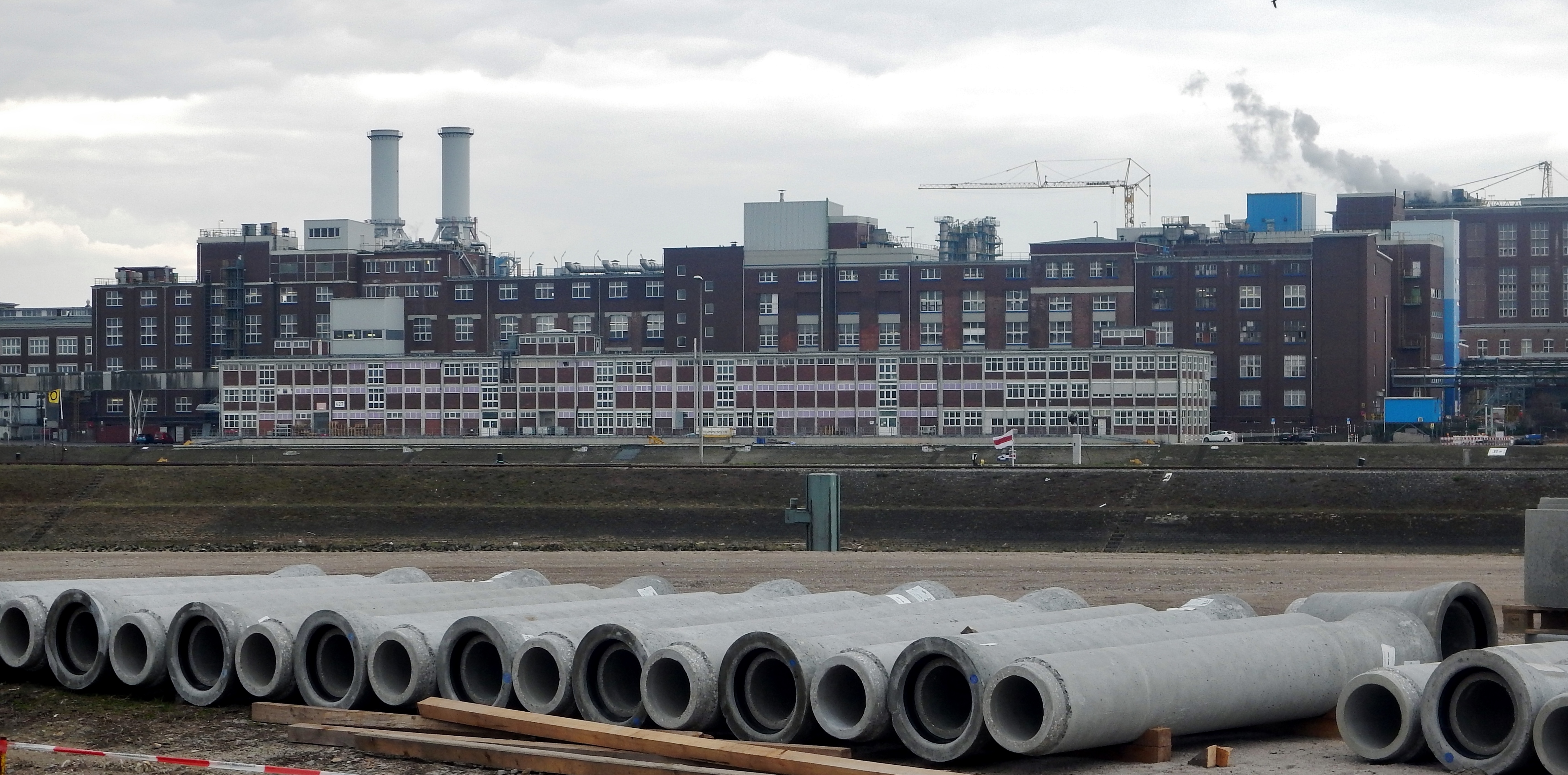
Featured photograph: BASF complex in Ludwigshafen, photographed by qwesy qwesy, 21 March 2016. Reused unchanged under CC BY 3.0. The photo illustrates European chemicals manufacturing and does not imply BASF is a target of the investigation.