
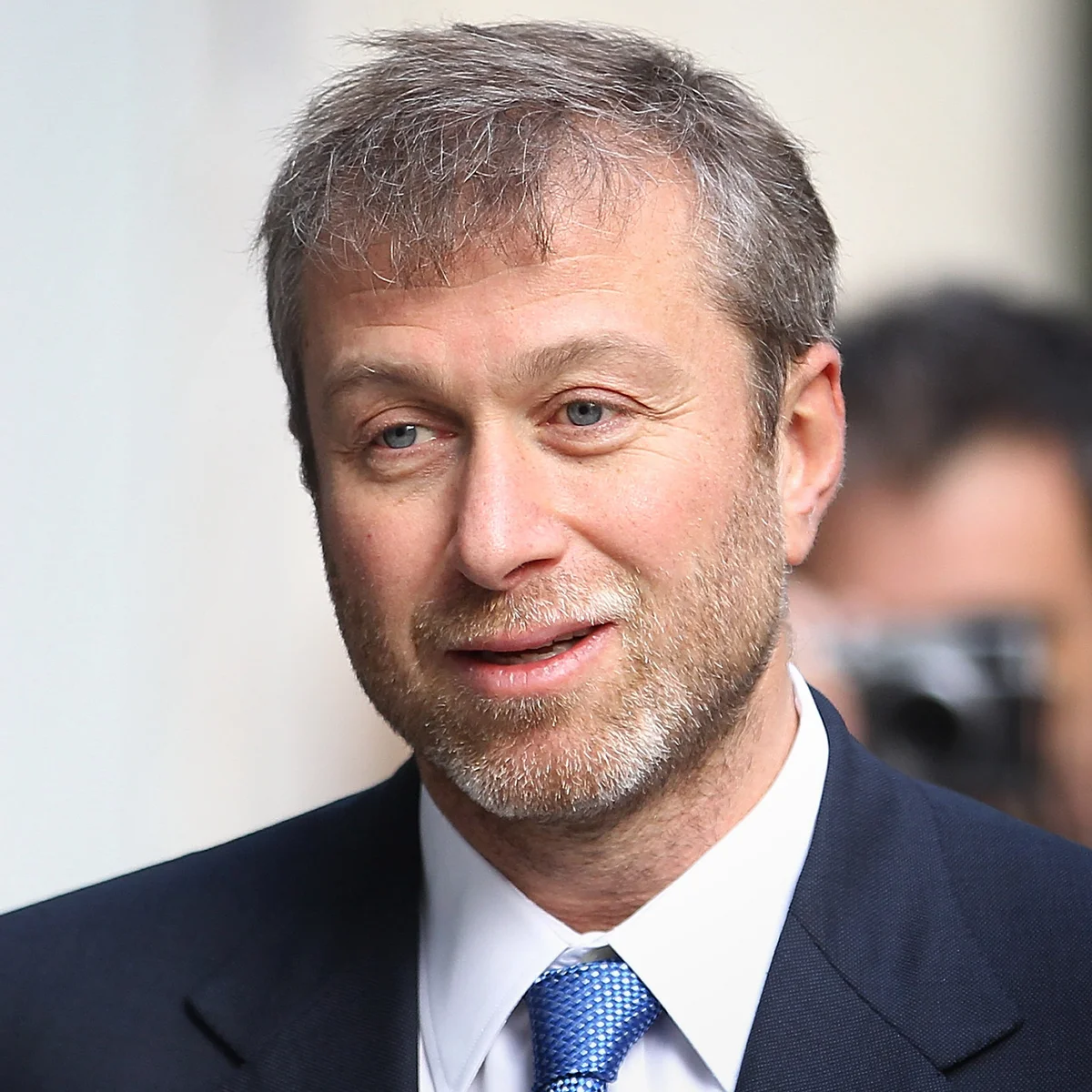
Roman Abramovich
Roman Abramovich is usually described as a Russian oligarch associated with Vladimir Putin. That description misses an important part of the story.
Abramovich is fundamentally a Yeltsin-era oligarch. His fortune was built during the chaotic privatization of Russia’s Soviet industrial assets in the 1990s. Oil was central to that rise: his acquisition of Sibneft transformed him from a young businessman into one of Russia’s major natural-resources tycoons.
That makes his story relevant beyond football and celebrity. It is also a story about oil, privatization, the end of the Cold War, Russian capitalism and the movement of enormous fortunes into Western financial centers.
Timeline
- 1966: Roman Abramovich is born in Saratov, USSR.
- 1985 — Age 18: Mikhail Gorbachev takes power.
- 1989 — Age 22: Abramovich runs Uyut, a cooperative producing plastic toys.
- 1991 — Age 24: The Soviet Union collapses.
- 1995 — Age 28: Under Boris Yeltsin, Abramovich and Boris Berezovsky move into Sibneft during Russia’s privatization of state assets.
- 1995–97 — Ages 28–30: Abramovich consolidates control of most of Sibneft, becoming one of the major Yeltsin-era oligarchs.
- 1999 — Age 33: Abramovich is elected a Member of Parliament (MP) in the Russian State Duma, representing Chukotka.
- 2000 — Age 33: Vladimir Putin becomes president. Abramovich is already a major oligarch and politician.
- 2000/01 — Age 34: Elected Governor of Chukotka, where he remains in office until 2008.
- 2001 — Age 34: Millhouse Capital manages his expanding portfolio, including oil, metals, aviation, banking and other industrial assets.
- 2003 — Age 36: Abramovich buys Chelsea FC and begins heavily financing the club.
- 2005 — Age 38: He sells his 73% stake in Sibneft to state-controlled Gazprom for about £9.87 billion, roughly $13 billion.
- 2008 — Age 41: Leaves the governorship of Chukotka.
- 2008 — Age 41: Elected to the Chukotka regional Duma and becomes its chairman.
- 2008–2013: Remains active in regional politics while continuing as owner of Chelsea and a major investor in Russian industry.
- 2010s: Maintains major interests in Evraz, steel, mining and metals.
- 2013 — Age 46: Leaves his position as chairman of the Chukotka regional Duma.
- 2018 — Age 51: His ability to reside freely in Britain becomes more complicated, and he obtains Israeli citizenship.
- 2021 — Age 54: Obtains Portuguese citizenship.
- 2022 — Age 55: The UK sanctions Abramovich and freezes his British assets, including Chelsea. The club is subsequently sold under a special government licence.
- 2026 — Age 59: More than £2.5 billion from the Chelsea sale remains frozen in a UK bank account.
The Last Soviet Cowboy Tycoon
Abramovich had climbed out of the Soviet-Bolshevik hellhole and reached what looked remarkably like the American Dream.
He survived the Soviet Union, Gorbachev, the end of the Cold War, the collapse of the Iron Curtain, Yeltsin’s chaotic capitalism and then Putin’s Russia.
More remarkably, he was a Yeltsin-era oligarch who successfully survived into the Putin era. Few major figures of the 1990s managed that transition so successfully.
I suspect that his move into parliament and later the governorship also offered a degree of political immunity and protection at a time when Putin was becoming more dominant and increasingly challenging the power of the Yeltsin-era oligarchs.
When Abramovich received his multibillion-dollar payday from the sale of Sibneft, he did not trust Moscow with his money. His fortune was structured internationally within the Anglo-Saxon financial system, including Cyprus and British offshore jurisdictions.
After his payday, he wanted to get out of politics and leave Russia, but Putin insisted that he stay. Having been one of the few Yeltsin-era oligarchs to receive a golden handshake, he could hardly refuse Putin’s request and continued his political career.
The EU and British governments later treated Abramovich as part of the Kremlin-linked Russian elite. Yet describing him simply as a Putin oligarch overlooks an important part of his history: Abramovich’s fortune was made under Yeltsin, long before Putin became president.
Abramovich, in that sense, was not created by Putin. He was a Yeltsin-era oligarch who learned how to survive Putin.
Russia launched its invasion of Ukraine on 24 February 2022. Abramovich announced the sale of Chelsea on 2 March. Eight days later, on 10 March, the UK sanctioned him, freezing his assets and requiring Chelsea to operate under a special licence. The eventual sale could proceed only under government licence, and Abramovich was prohibited from benefiting from the roughly £2.5 billion in proceeds, which were placed in a frozen UK bank account.
Looking at the timeline, it is difficult to argue that Abramovich’s decision to sell Chelsea was part of some Cold War-style Bolshevik conspiracy, as some in the West seemed to suggest.
The man who had climbed out of the Soviet-Bolshevik hellhole and helped revive Chelsea — and, to some extent, English football — ultimately found himself betrayed by what we might satirically call the English Bolshevik Republic: his assets frozen, his club forced into a government-controlled sale, and the logic of the Cold War suddenly revived around him.
Freezing the assets of a man who had placed so much of his wealth inside the Anglo-Saxon financial system inevitably raises a broader question about property rights, sanctions and legal certainty in the very system he had chosen to trust.
Eventually, the Bolsheviks got to Abramovich — but they were not the Soviet Bolsheviks. They were the British Bolsheviks
Future
According to my admittedly speculative calculations, Abramovich might even emerge as a possible replacement for Putin — perhaps even Russia’s next president. If so, it might be wise for the Bolshevik Republic of England to unfreeze his assets and send him his money back. If not for geopolitics, then at least do it for the Chelsea fans.
And who knows? It might even help cool some of the new Cold War tensions.