
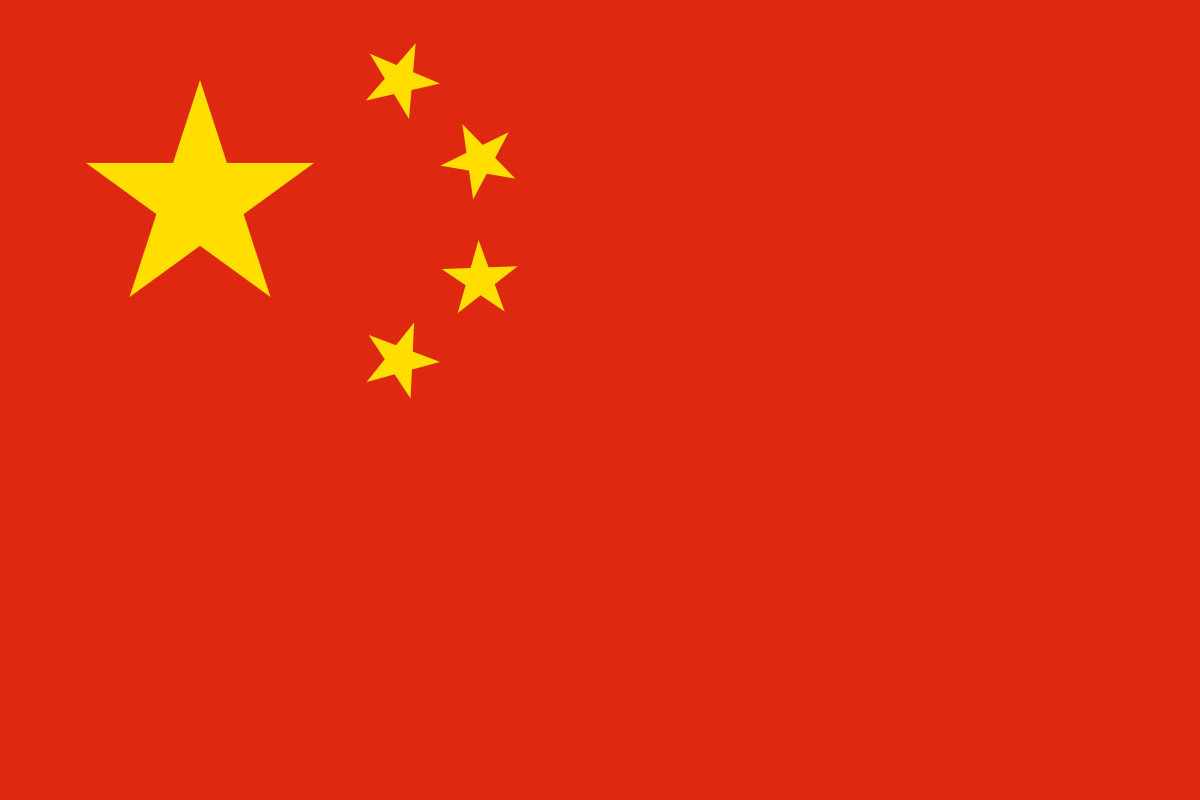
China presents itself as one of the world’s great ancient civilizations.
That is true historically. But when I look at modern China, I do not see a society that simply continued along the path of traditional Chinese civilization.
I see a society that progressively adopted Western models.
Modern China is obviously still Chinese in language, cuisine, festivals, historical memory and many family traditions. But visually, economically and socially, it looks very different from traditional China.
Chinese people today generally do not dress in traditional Chinese clothing. They wear suits, jeans, sneakers, shirts and jackets. They work in corporations, live in enormous modern cities, travel on high-speed trains, use smartphones, shop in malls and participate in one of the most technologically advanced economies in the world.
So the question is simple:
How much of modern China is really traditional Chinese civilization, and how much was imported from the West?
It Started Before Communism
The Westernization of China did not begin with Mao.
It began much earlier.
The Opium Wars in the nineteenth century exposed China to the military, technological and industrial power of European states.
From that point onward, China increasingly understood that if it wanted to become powerful and modern, it would have to adopt methods, technologies and institutions that had already developed elsewhere.
The Qing dynasty eventually collapsed in 1911.
China then entered a period of political fragmentation and ideological experimentation.
Chinese intellectuals began searching abroad for models.
Some looked toward liberalism.
Some toward nationalism.
Some toward constitutional government.
And some toward Marxism.
This is where the Westernization of China became much deeper.
The Bolshevik Coup
In 1917, the Bolsheviks seized power in Russia.
What is conventionally described as the Russian Revolution, I prefer to call the Bolshevik coup d’état.
The new Soviet regime then began exporting its ideology internationally.
Marxism-Leninism travelled east, and the Chinese Communist Party was founded in 1921.
The ideological origin is obvious.
Karl Marx and Friedrich Engels were German.
Lenin belonged to the Russian branch of European revolutionary thought.
Communism did not come from Confucius.
It did not come from traditional Chinese political philosophy.
It was imported.
China therefore adopted a Western political ideology and used it as the basis for a radical transformation of Chinese society.
The Overthrow of Traditional China
The Communist victory in 1949 followed a long civil war, so I would not describe it as a coup in the same sense as the Bolshevik seizure of power.
Culturally, however, it represented something much larger: a revolutionary overthrow of traditional Chinese civilization.
The Communist Party did not simply change the government.
It sought to transform society itself.
Traditional hierarchies were attacked.
Religious institutions came under pressure.
Confucianism was associated with the old order.
Then came the Cultural Revolution.
The campaign against the “Four Olds” — old customs, old culture, old habits and old ideas — openly targeted inherited Chinese civilization.
The objective was not simply political change.
It was to build a new society.
And the ideological framework used to justify that transformation came from Europe through Russia.
Then China Adopted Western Modernity Again
After Mao, the transformation continued under Deng Xiaoping.
This time China opened itself to markets, foreign investment, international trade, corporations, manufacturing and consumerism.
Look at Shanghai, Shenzhen or Beijing today.
Skyscrapers.
Business districts.
Factories.
Financial centers.
Universities.
Technology companies.
Shopping malls.
International airports.
Mass consumer culture.
Western-style clothing.
These are not developments that emerged from traditional imperial Chinese society.
The modern corporation, industrial factory, technological university, financial market and mass consumer economy had already been developed in Russia, Europe and the United States.
China adopted those models.
It copied them.
And it became extremely good at doing so.
In some areas, China now executes these systems more efficiently than the countries from which they originally came.
Its manufacturing capacity is enormous.
Its high-speed railway network is extraordinary.
Its electric vehicle industry is highly advanced.
Its digital economy is among the most sophisticated in the world.
But mastering a model is not the same as inventing it.
Look at Chinese Society Today
The transformation is visible in everyday life.
Chinese people today generally dress much more like people in New York, London, Paris, Moscow or Brussels than like people in imperial China.
They work in modern companies.
They use global technologies.
They live in cities built around the same basic urban model seen elsewhere in the industrialized world.
They participate in banking, finance, corporate employment, mass education, consumer culture and digital technology.
Traditional Chinese culture certainly remains present.
Chinese New Year survives.
Chinese cuisine survives.
The Chinese language survives.
Family traditions survive.
Historical memory survives.
But modern Chinese society is not simply an extension of traditional China.
It is a society that underwent enormous cultural, political, industrial and technological transformation by adopting foreign models.
The Chinese Paradox
This is what I find most fascinating about modern China.
China adopted Marxism, an ideology born in Europe.
It used that ideology to dismantle major parts of its traditional social and cultural order.
Then, after Mao, it adopted another set of models from the industrialized world: corporations, markets, international trade, modern finance, mass production, consumer culture and technological development.
In other words, China was Westernized twice.
First politically and ideologically through Marxism and the Soviet model.
Then economically, industrially and culturally through the broader model of modern Western society.
China did not create an entirely different modern civilization.
It adopted systems that already existed elsewhere and implemented them on an enormous scale.
That does not make China’s achievement insignificant.
Quite the opposite.
China’s achievement lies in the extraordinary speed and effectiveness with which it absorbed, copied and mastered those models.
Today, China can outperform Western countries in areas that were originally pioneered in the West.
But that does not change the historical origins of the model.
Modern China did not emerge simply from traditional Chinese civilization.
It emerged through the progressive replacement of much of that traditional order by imported political, industrial, technological and corporate systems.
That, in my view, is the real story of modern China.
China did not invent an alternative to Western modernity. It adopted it, mastered it, and became one of its most successful practitioners.
Final Note
This is an opinion piece and a subjective interpretation of modern Chinese history. My argument is that China did not invent a separate form of modernity. It progressively abandoned large parts of traditional Chinese civilization and adopted political, industrial, technological and corporate models that originated in Russia, Europe and the United States.