
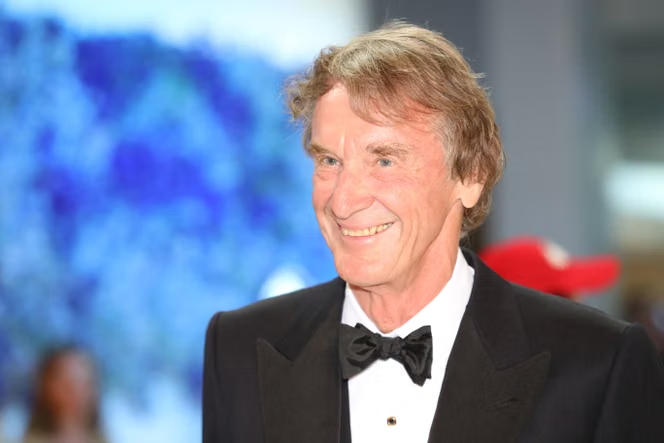
I have chosen Sir Jim Ratcliffe, founder, chairman and controlling shareholder of INEOS, as my Person of the Year 2026.
Ratcliffe’s story is an unusual one in modern European industry. Born into a working-class family near Manchester, he trained as a chemical engineer and spent much of his career in the chemicals business before founding INEOS in 1998. From those beginnings, he built one of the world’s largest privately owned chemical groups and became one of Britain’s most successful industrial entrepreneurs.
Ratcliffe is also more than an industrial executive. As INEOS’s majority owner, with a stake of approximately 62%, he has his own capital at stake in the decisions he makes and the industrial strategy he advocates. That distinction matters.
Two things in particular motivated my choice.
First, his willingness to speak publicly and personally about European industrial policy. At a time when many European business leaders prefer to express their concerns through trade federations, industry associations and carefully worded collective statements, Ratcliffe has repeatedly put his own name and reputation behind his views.
Whether one agrees with all of his positions or not, there is something increasingly rare about an industrial owner publicly challenging policymakers on energy prices, carbon costs, regulation and Europe’s declining industrial competitiveness. He does not hide behind an association or an anonymous industry position. He makes the argument himself and accepts the scrutiny that comes with it.
Second, he has backed those words with investment. INEOS’s Project ONE in Antwerp — a major new ethane cracker — represents one of the most significant industrial investments in European chemicals in a generation. At a moment when plants are closing, production is moving elsewhere and companies are questioning further investment in Europe, Ratcliffe went ahead.
That combination is ultimately why I selected him: he speaks openly about what he believes Europe is getting wrong, while continuing to put capital at risk on the proposition that European industry is still worth fighting for.
For me, that is industrial leadership.