
Key Challenges in Scaling Bio-Polymer Blends
Scaling bio-polymer blends is not simply a matter of increasing throughput. Several factors can significantly impact blend quality as production volume increases. One major hurdle is maintaining consistent blend morphology. Factors such as shear rate, residence time, and temperature profiles within the extruder can vary dramatically between lab-scale and pilot-scale equipment, leading to changes in the dispersion of one polymer phase within another. This altered morphology can impact the final mechanical, thermal, and optical properties of the blend. Variations in feedstock quality, inconsistent mixing, and inefficient heat transfer can further compound these challenges.
Extruder Design and Operation for Scale-Up
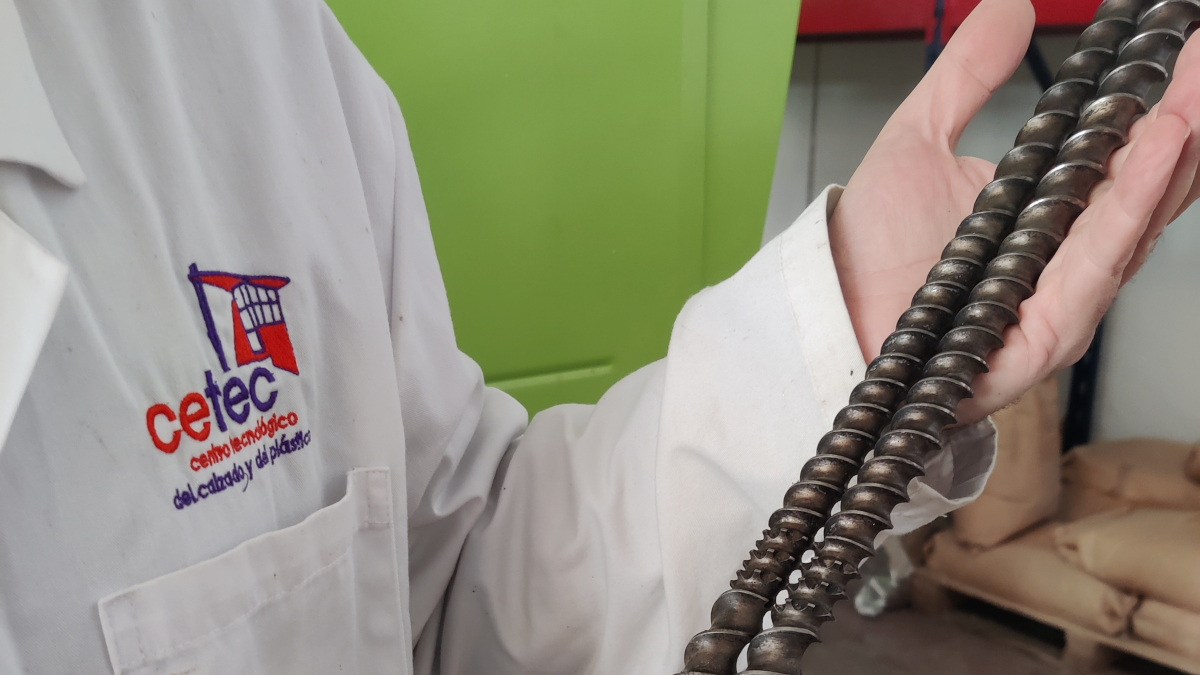
A careful selection and optimization of extruder design are essential for successful scale-up. Twin-screw extruders, with their superior mixing capabilities, are the preferred for bio-polymer blending, especially when dealing with incompatible polymers or high viscosity ratios. Key design parameters include screw geometry (e.g., screw elements, pitch, channel depth), L/D ratio (length-to-diameter ratio), and die design.
During operation, precise control of temperature profiles along the extruder barrel is crucial to ensure proper melting, mixing, and prevent thermal degradation. These parameters are even more important when bio-polymers are extruded. Optimizing screw speed and feed rate allows for control over shear rate and residence time, both of which influence blend morphology. The use of static mixers downstream of the extruder can further enhance blend homogeneity. Currently, the use of simulation software helps to model polymer flow and mixing within the extruder. This can help predict blend morphology and optimize processing parameters before investing in costly trial runs on production-scale equipment. Also, analyzing blends quality (morphology, particle size, mechanical properties) during scale-up trials could help to adjust parameters as needed.
Strategies for Successful Blend Scale-Up
To mitigate the challenges of scaling bio-polymer blends, a systematic approach is crucial. A starting point should be a thorough understanding of the blend’s behavior through rheological characterization and miscibility studies. This is important to the selection of appropriate extruder equipment and processing parameters. For an early identification and correction of any issues, it is necessary a stepwise scale-up approach, gradually increasing production volume while closely monitoring blend quality. Also, it is necessary to focus on consistent feedstock quality and ensure proper pre-drying of hygroscopic polymers. Finally, the use of compatibilizers should be considered to enhance the miscibility and interfacial adhesion between the bio-polymer phases but, care must be taken not to affect biodegradability.
upPE-T Examples
Examples of successful scaling up of polymer blends by extrusion in upPE-T can be mentioned, such as the blends of PHBV obtained in the project with commercial polymers such as PLA or PBS.
These blends of PHBV with PBS and PLA were successfully scaled up to subsequently produce films and packaging that could be successfully tested by end users, in applications such as lollipop wrappers, or packaging for fresh cheeses and bakery.
Conclusion
Scaling bio-polymer blends with extruders requires careful consideration of various factors, from extruder design and operation to feedstock quality and blend characteristics. By employing a systematic approach, optimizing processing parameters, and leveraging advanced techniques, it is possible to achieve consistent blend morphology and desired properties at production scale, unlocking the full potential of polymer blends for a wide range of applications. The focus should always be a balance of cost and final properties of the scaled polymer.
The project’s latest findings will be presented in a final webinar this April, where professionals from industry and academia will discuss enzymatic PET upcycling, PHBV production, and its potential role in future plastic waste management strategies.
Register for the Webinar: Soon on upPE-T webpage
Learn more about upPE-T: https://www.uppet.eu/
CETEC: https://ceteccentrotecnologico.org/

upPE-T project has received funding from the European Union’s H2020 Programme for research, technological development and demonstration under Grant Agreement 953214.
Author information
Dr. Alejandro Arribas Agüero, with over 25 years of experience in polymer extrusion, has worked in CETEC’s R&D department since 2003. He has participated in numerous EU-funded research projects on topics related to biodegradable polymers.
CETEC
The Technological Center of Footwear and Plastic of the Region of Murcia (CETEC). CETEC has more than 25 years of experience in the footwear and plastics areas. CETEC specializes in research involving polymers, especially biodegradable polymers, with a special focus on PHBV. CETEC has a pilot polymer transformation plant and a testing laboratory. In recent years, we have developed our own scale-up plant for PHBV production.
Leave a Reply