
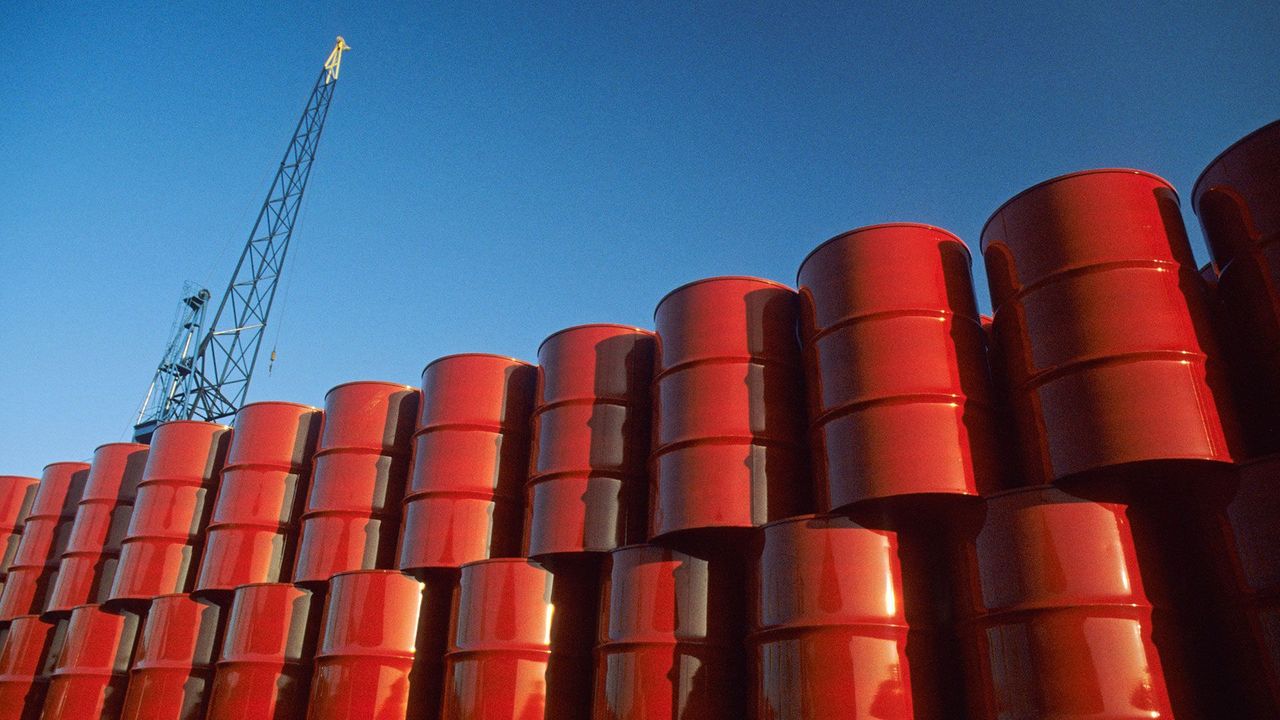
I will talk about crude oil prices; meant as in Opec crude oil, average price per year, $/barrel = 160 litres).

The 1960s
The 1960s are remembered as a time period of rapid workforce growth (roughly 33% between February 1961 and December 1969), tax cuts, low unemployment, rapid GDP growth, gains in productivity and generally low inflation.
Social and popular movements demanding more freedom. A few clichés such as hippies, flower power, swinging sixties and of course the golden sixties. During the 1960s, things evolved in a positive way and people were happy to put it bluntly; people had the perception that their socio, cultural and political demands were met.
The 1970s
The Energy crisis in the 1970s is a real choc. During the 1960s the price remained under 1.7 $ but it climbed over 2$ in the 1970s and reached 35.5 $ in 1980. The year 1979 and 1980 are the worse: a little under 13 $ in 1978 and 29 $ in 1979.
The Middle Easters conflicts and wars were the most important causes of this inflation and crisis, of course to be understood in a Cold War context as Western powers were pulling the ropes behind the geopolitical scene.
The crisis was a terrible choc for the households too. Oil companies revenues exploded and crude oil (financial products) was the best investment at that time. On the other side, the modern welfare states went into deficit mode: tax increase, unemployment, social unrest. etc.
Last 40 years
Looking at the last 40 years (period 1982-2024)
- Lowest = 13.53 $ (1986).
- Highest = 109.45 $ (2012) during the Eurozone debt crisis: Foreign investors stopped lending money to the EU member states.
- Huge gap: 2014 (96$) – 2015 (49$)
- A little under 41 $ in 2016.
- Covid regime: The Covid crisis started in December 2019 and 41 $ was reached during the first covid lockdown year 2020.
- Start Ukraine war 100 $ in 2022.
Conclusion
The price differences are becoming bigger, the crude oil market is becoming more volatile. This creates socio-economic instability.
Do you remember the Copper, Bronze and Iron Age? Well, we’re now in the Carbon Age. This has a few implications: the price of carbon will influence the whole of society. Let me re-phrase this: the dynamic between carbon supply and carbon demand is the red wire.
High crude oil prices have a select group of winners: oil companies, financial markets operators and crude oil speculators.
Low crude oil prices have more winners: corporations, businesses, households and governments.
We need, low and stable crude oil prices. The easiest way to reach that equilibrium, is to inundate the market with carbon. Whatever policymakers or speculators believe; our best, cheapest and most reliable source of carbon is crude oil. The lower the price of crude oil, the better it is for the highest proportion of the population.
Unfortunately, many policies (such as the EU Green Deal) complicate the material and immaterial market access of crude oil … an unwise macro-economic strategy during unstable times in the Carbon Age.
Leave a Reply