
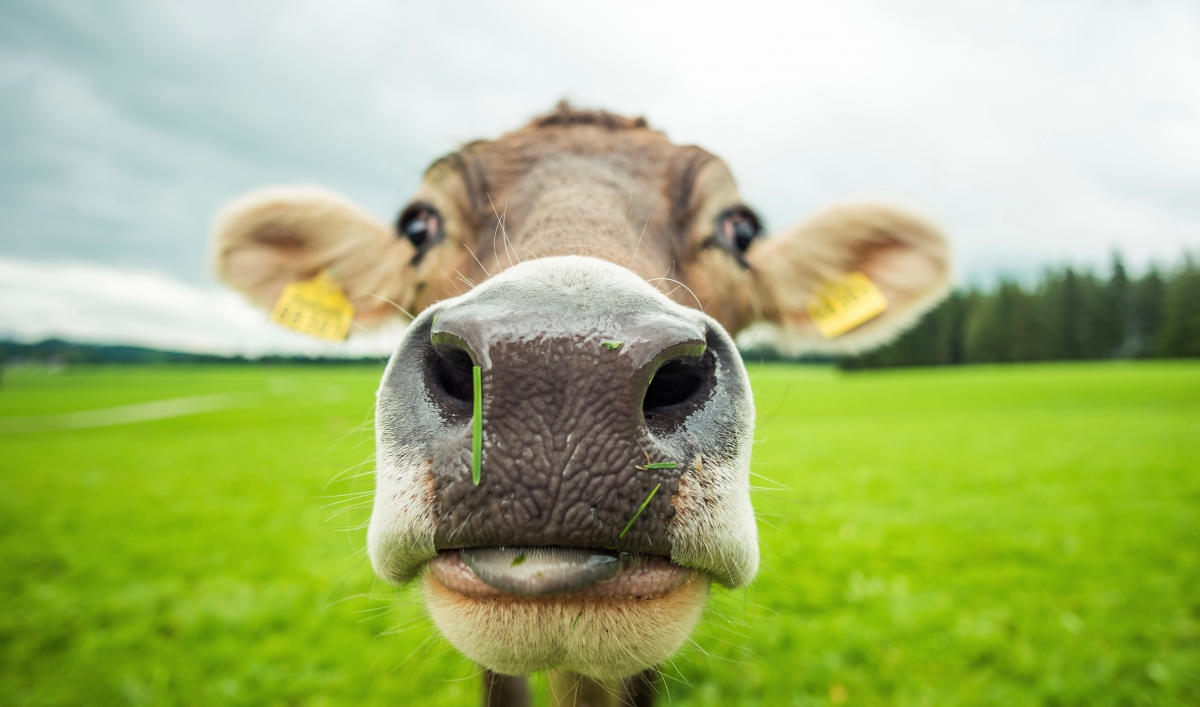
Cows are ruminants, they eat grass…. under normal conditions.
There a lots of microbes and bacteria on the grass and soil and those will be ingested by the cows too. Those microbes play a fundamental role.
The microbes and bacteria play a determinant role in the digestion process of the cows as they degrade the grass in the intestines and the microbes will eventually also be metabolised by the digestive process of the cow.
The stomachs of the cows allow fermentation
The natural digestive process of the cow involves a lot of chewing … ‘rumination’. The rumination process means to spit out grass balls from the stomach to the mouth, chew the grass balls and swallow them again.
This rumination process leads to a lot of oxygen / air entering the cow’s digestive process. In other words, the natural digestive process of the cow is an ‘aerobic’ process.
However, problems occur due to intensive agriculture:
The more nitrogen, soja, meat etc. we add to the cow’s diet, the less cows will ruminate because the microbes and bacteria have lots of rich food to process, instead of just grass. The less rumination, the less oxygen enters into the digestive system and the more the degradation process becomes ‘anaerobic’…. and that’s when the cows start emitting methane.
In other words, it’s not the grass cows who eat grass that emit methane, it’s the cows who are bred industrially and fed with nitrogen, soja, meat etc that emit methane.
In addition, industrially bred cows will fart more than cows fed on grass.
Leave a Reply