
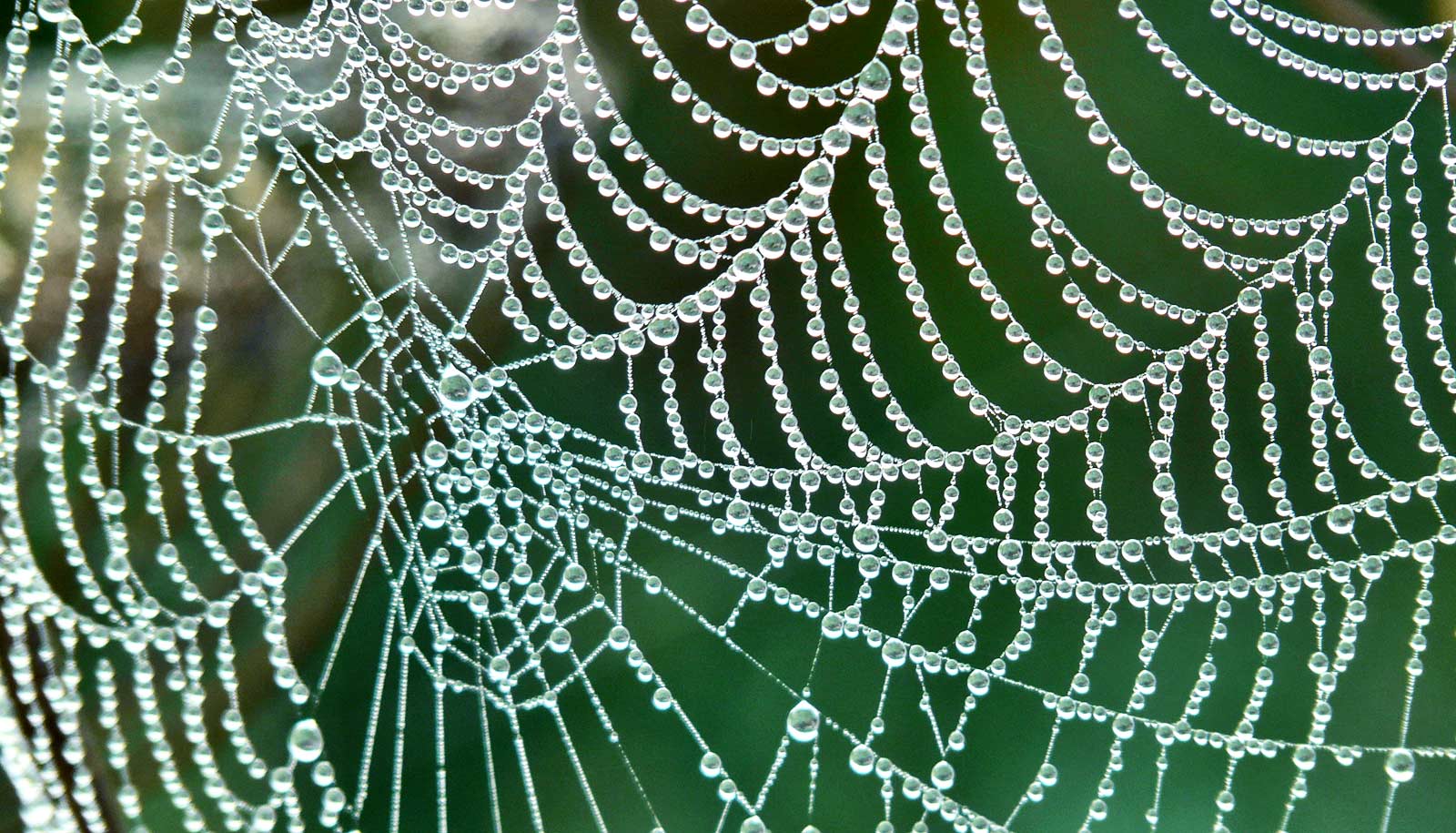
The scientists, from Aalto University and VTT Technical Research Centre of Finland, mimicked spider silk using bacteria with synthetic DNA.
The analogous silk protein was then glued together with wood cellulose to form a bio-based composite that could be used in medical applications, as well as the textile industry and packaging.
“We used birch tree pulp, broke it down to cellulose nanofibrils and aligned them into a stiff scaffold. At the same time, we infiltrated the cellulosic network with a soft and energy dissipating spider silk adhesive matrix.
“Our work illustrates the new and versatile possibilities of protein engineering.
In future, we could manufacture similar composites with slightly different building blocks and achieve a different set of characteristics for other applications.
Currently we are working on making new composite materials as implants, impact resistance objects and other products.”
VTT research scientist Pezhman Mohammadi.
Bioplastics are an emerging new class of materials that seek to replicate the properties of petroleum-based plastics, but which are biodegradable and significantly less harmful to the environment.
The extent to which plastics have infiltrated virtually every aspect of Earth’s ecosystem has become much more apparent in recent years, with microplastic particles found in the deepest parts of the ocean and embedded in ice at the polar regions.
Engineers and scientists are now looking to nature and biomimetics to replace these harmful plastics with eco-friendly alternatives.
This latest research, published in Science Advances, points to how proteins such as that found in spiders’ webs could be modified to optimise the functionality of bioplastic materials.
“Because we know the structure of the DNA, we can copy it and use this to manufacture silk protein molecules which are chemically similar to those found in spider web threads.
The DNA has all this information contained in it.”
Markus Linder, from Aalto University.
REFS
Spiders’ silk gives strength to wood-based bioplastics